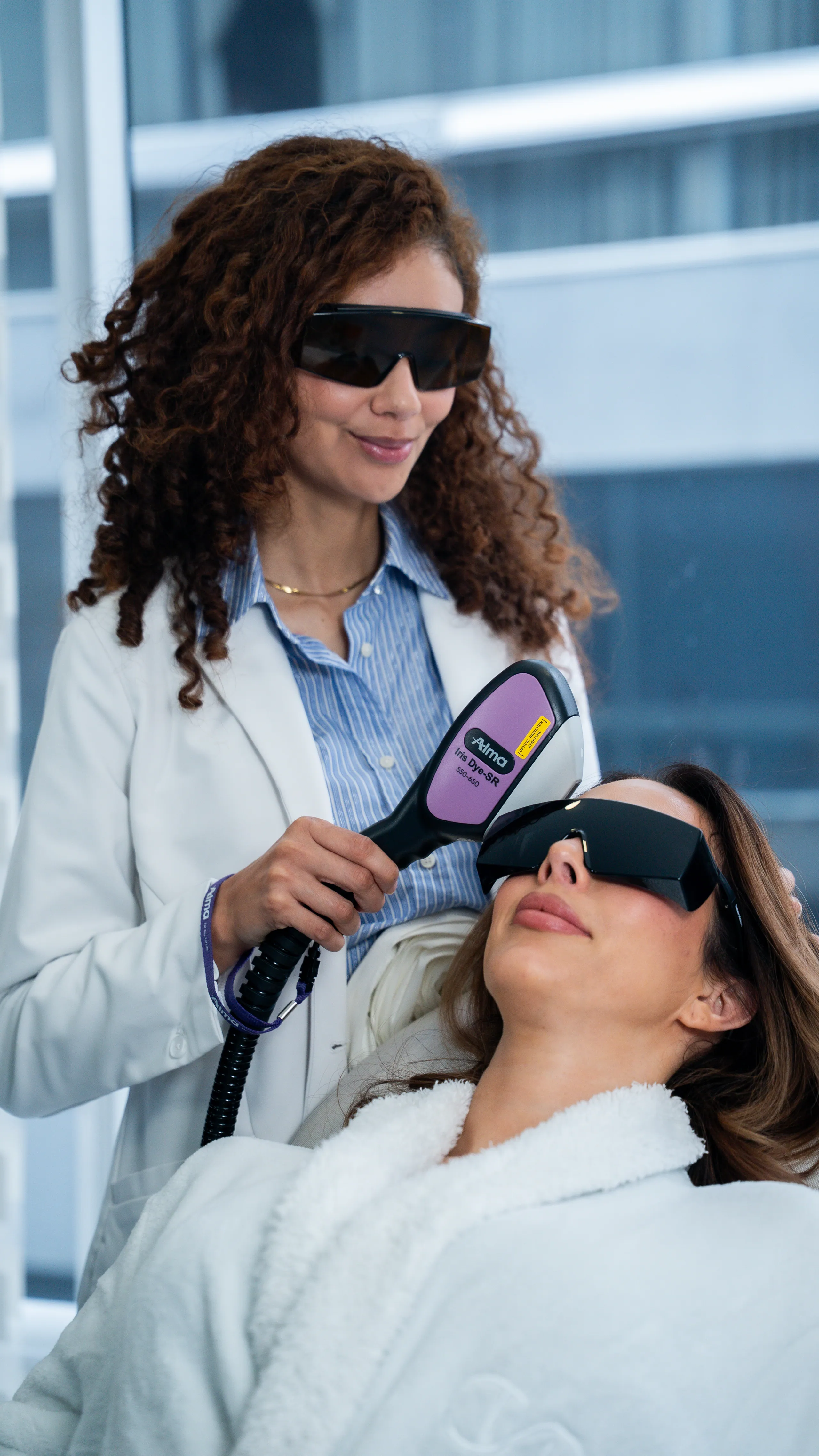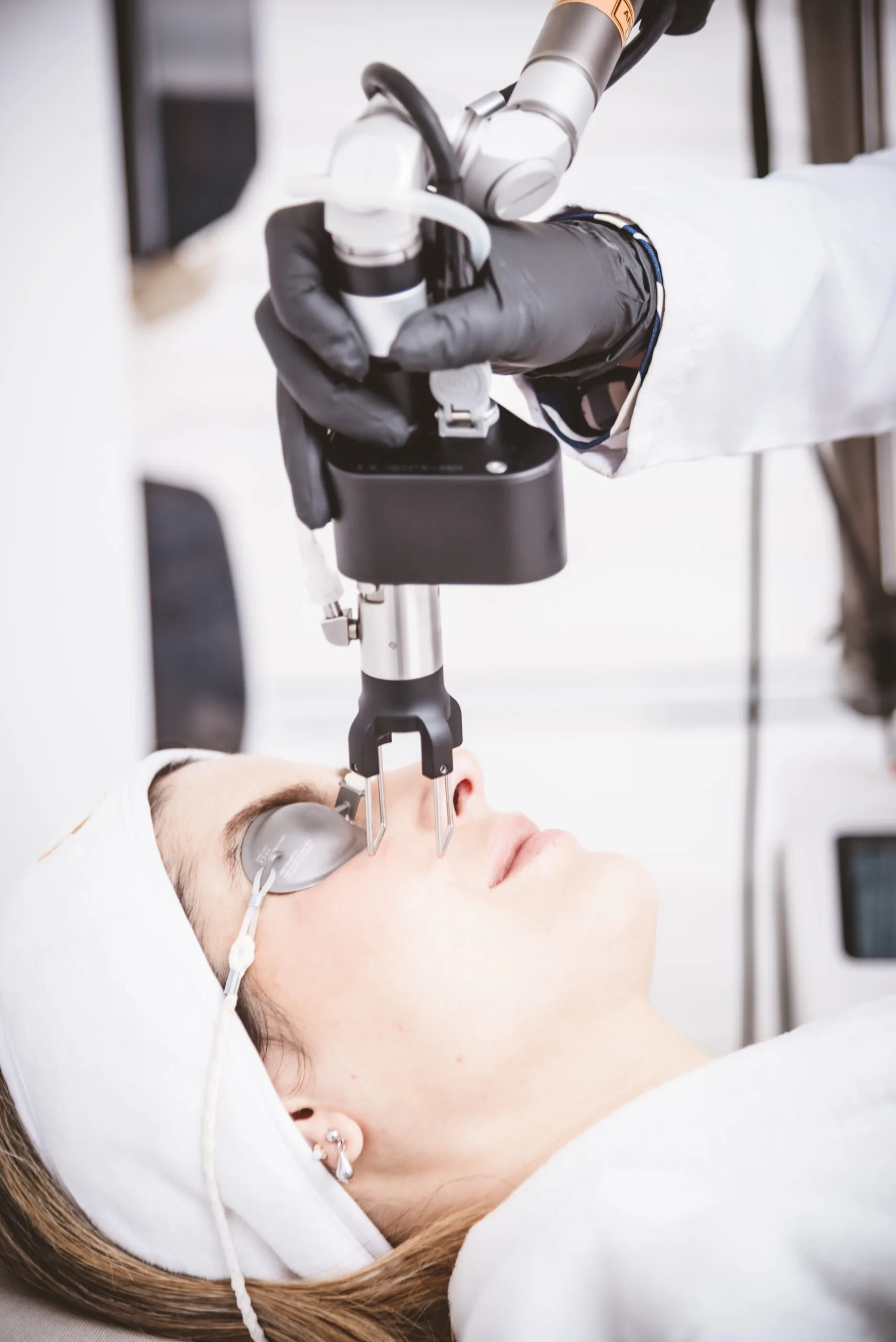
Is your scar still noticeable? Meet the protocol that combines CO₂ laser + exosomes to improve its appearance. Renewscar is a combined protocol that integrates fractional CO₂ laser and exosomes as an adjuvant treatment, with the aim of improving the evenness of the relief, the texture and the color appearance of scarred skin.
What is Renewscar (scars)?
Renewscar is a combined protocol that integrates: Fractional CO₂ laser. Exosomes as an adjuvant treatment. In this way, we aim to improve the evenness of the relief, the texture and the color appearance of scarred skin.
Atrophic vs. hypertrophic scars: what does it mean?
Atrophic: they look sunken (like small pits) because collagen was lacking during skin repair. They are frequent in acne scars or old injuries. Hypertrophic: they look raised or thicker because the body produced more collagen than necessary. They stay within the edge of the original wound and are common in surgical or burn scars. Why does it matter? Because they are not treated in the same way: with atrophic scars the aim is to improve relief and texture, while with hypertrophic scars the aim is to soften and flatten their appearance.
How does it work?
Renewscar combines two complementary mechanisms: Fractional CO₂ laser: supports skin renewal and collagen remodeling. It is used on scars (for example, acne or surgical scars) according to medical judgment. Exosomes: they are used to support the repair and recovery of the skin after procedures. Their use is complementary, not a stand-alone solution for scars.
Why are they combined?
Current clinical practice prioritizes combined protocols to optimize results and balance effectiveness with recovery time.
Benefits
Improvement in texture and smoothness. A more even relief. A “flatter” appearance in hypertrophic scars (in selected cases). A more even tone over time.
Types of treatment for scars
Scar management can include different options, such as laser treatments, microneedling, radiofrequency, peels, application of medication into the scar or, in some specific cases, revision surgery.
Areas that can be treated
Face (acne scars). Abdomen. Arms and legs. Back and chest. Surgical areas that have already healed.
How do you know if you are a candidate?
At TD Beauty Clinic we review: The type of scar (atrophic or hypertrophic; keloids require special management). Phototype and risk of hyperpigmentation. History of cold sores (if it is the face). Relevant medication. Pregnancy or breastfeeding. Expectations (progressive improvement, not perfection).
What to expect during the procedure
Cleansing of the area. Topical anesthetic (if applicable). Application of the CO₂ laser. A sensation of controlled heat or burning. Application of the adjuvant (exosomes).
Results
Results are progressive and improve with collagen remodeling over weeks to months. Strict sun protection, compliance with aftercare and medical follow-up all help.
Frequently asked questions
Does it hurt? It can cause manageable discomfort; a topical anesthetic is usually used. Does it work for acne scars? It can improve texture and relief, depending on the type of scar. What if I have darker skin or pigment easily? Parameters and care are adjusted; the assessment is key.
Informative content. It does not replace an individual medical assessment.