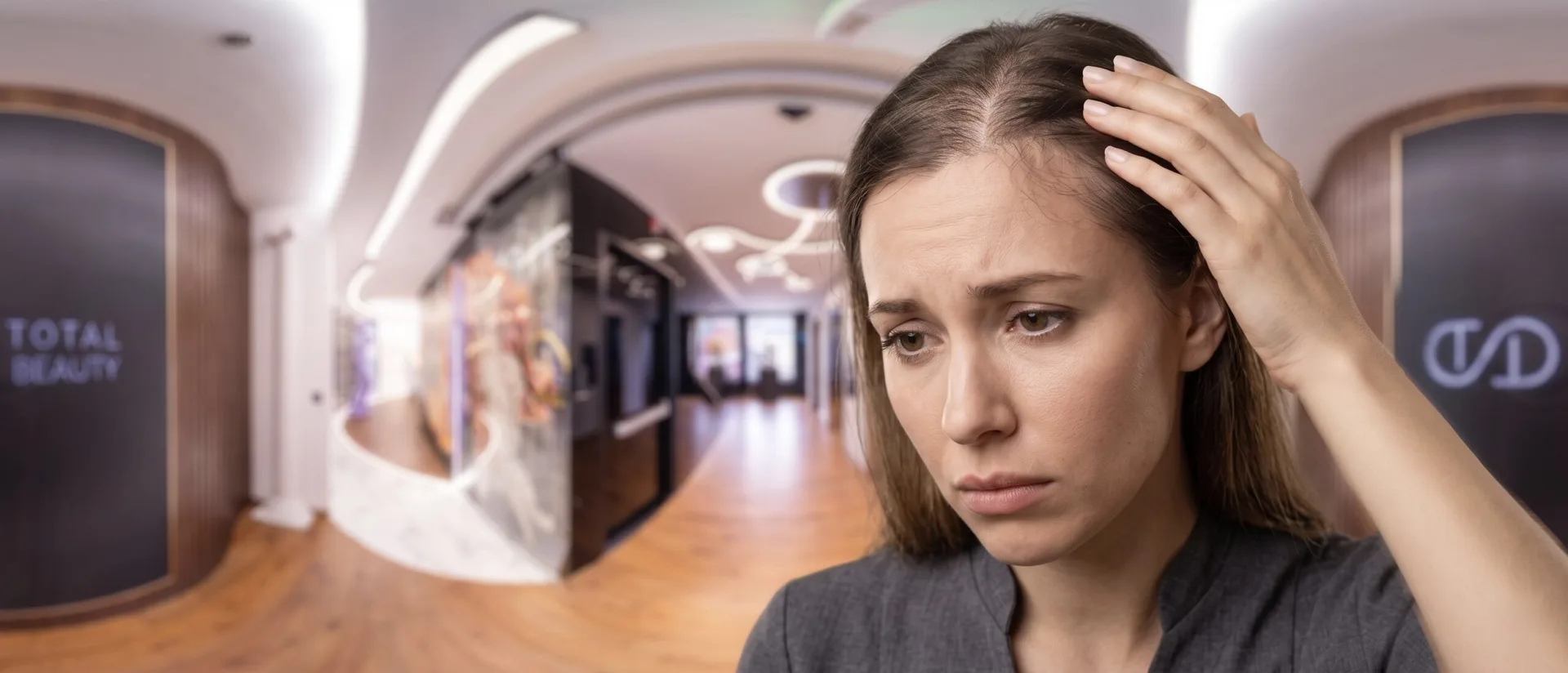
Female hair loss: how to slow shedding and recover hair density. 50% of women over 50 lose hair, and menopause is one of the main triggers. The good news is that, when it is diagnosed in time, female hair loss can be treated. At TD Beauty Clinic, our team leads personalized, science-backed protocols to slow shedding and bring density and vitality back to your hair.
What is female hair loss?
Female alopecia is the progressive loss of hair in women. It can show up as thinning, reduced density or marked shedding. Unlike men, women rarely lose hair in localized areas such as the temples or the crown; more often the scalp becomes more visible because of diffuse loss. The most frequent types are: Female androgenetic alopecia: the most common, associated with hormonal and genetic factors. Telogen effluvium: temporary shedding triggered by stress, the postpartum period, restrictive diets or illness. Scarring alopecias: they permanently damage the follicle if they are not treated in time. Alopecia due to nutritional deficiency: lack of iron, vitamin D, zinc or protein. Inflammatory alopecia of the scalp: associated with dermatitis, psoriasis or other conditions.
How does hair loss work in women?
Hair has a natural cycle: it grows, rests and falls out to make way for a new one. When that cycle is disrupted, the follicle gradually weakens and starts producing finer, shorter hairs until it stops producing them altogether. During menopause, the drop in estrogen and follicular aging can bring: Progressive thinning of the hair. Loss of thickness and density. More daily shedding. A more visible scalp. Changes in the hair growth cycle. That is why the first step is always to understand the cause. A precise dermatological diagnosis makes it possible to tell apart hormonal, nutritional, inflammatory and scarring alopecia, and to choose the right treatment.
Benefits of treating female hair loss early
Seeking professional help at the first signs of shedding makes an enormous difference. The main benefits include: Stabilizing the shedding and keeping it from progressing. Recovering hair density and visible volume. Strengthening the follicle so that it produces healthier hairs. Improving scalp health by reducing inflammation and irritation. Recovering confidence and emotional wellbeing, since hair is part of identity and self-esteem.
Types of treatment at TD Beauty Clinic
1. Selected hormonal therapies
2. Vitamin and mineral cocktail
3. Hair mesotherapy
4. Exosomes and biostimulation
5. Hair transplant
6. Personalized medical protocols
How do you know if you are a candidate?
You are a candidate for a hair assessment at TD Beauty Clinic if you notice any of these signs: More hair than usual on your pillow, in your brush or in the shower. Your part looks wider and wider, or your scalp is more visible. Your hair feels finer, weaker or flat. You are going through menopause or perimenopause. You have had recent hormonal changes, such as the postpartum period, contraceptives or thyroid disorders. You have a family history of alopecia. You have noticed itching, redness or crusting on the scalp.
What to expect during the procedure
Your experience at TD Beauty Clinic is designed so that you feel accompanied at every step: Initial dermatology consultation. Digital trichoscopy. Complementary studies. Design of the personalized protocol. Scheduled sessions. Medical follow-up.
Results
Results vary depending on the type of alopecia, consistency with the treatment and the moment at which it begins.